Category: Sermon

  • Untitled post 180

    When Shepherds Fail, God Acts

    “Woe to the shepherds who destroy and scatter the sheep!” Jeremiah’s opening salvo isn’t polite. It’s prophetic fury aimed at leaders who have used their power to scatter, destroy, and neglect the vulnerable entrusted to their care.

    We’ve watched this pattern repeat across history. In apartheid South Africa, church leaders used Scripture itself to legitimise oppression. The Windrush scandal saw decades-long residents suddenly declared illegal and deported. The Horizon scandal destroyed innocent postmasters while those who knew the system was flawed protected their own interests. And through it all, where was the prophetic voice of the church?

    But here’s where both Jeremiah and Luke’s Benedictus announce something radical: God takes the initiative, “I myself will gather the remnant of my flock.” Not the failed shepherds. God acts. And if God, then Jesus. If Jesus, then the body of Christ. If the body of Christ -well, that means us.

    This divine initiative doesn’t mean our passivity. Zechariah’s song connects God’s salvation to covenant, and covenant is gospel relationship, mutual commitment and how we live together. Our Wesleyan tradition insists you cannot separate personal holiness from social holiness. You cannot love God while ignoring your neighbour’s suffering. You cannot pursue private piety while accepting public injustice.

    When Jeremiah promises God will “execute justice and righteousness in the land,” that Hebrew word sedaqah doesn’t mean correct doctrine. It means right relationships. Economic justice. Systemic equity. Everyone living secure. This isn’t abstract theology.  It is freedom. It is people having enough to eat, safe and sheltered. It means that we cannot hide behind vague language about “loving everyone” while avoiding the particular challenges of being loving towards everyone.

    For churches wondering about the future, these texts demand harder questions: Have we been faithful shepherds of our communities, or focused on institutional survival? Have we integrated holiness and righteousness, or settled for private piety disconnected from public justice?

    But these texts won’t let us despair. Because God is already gathering the scattered, bringing light to those in darkness, guiding feet into the way of peace. The new dawn is breaking into the world. We can sit in darkness complaining it’s not bright enough, or step into the light already here and let it guide our feet.

    That’s the choice. That’s the Advent hope that transforms everything.

    #AdventHope  #PropheticFaith  #SocialHoliness
    #RCLProper 29 (34)  #67C
    #Jeremiah2  #Luke1
  • God Is Already Building the New Thing

    God Is Already Building the New Thing

    It’s easy to despair when the certainties we took for granted feel increasingly fragile: standards of living, democracy, peace while the planet is still groaning under industrial hubris. But what if the crumbling isn’t the end of the story?

    This Sunday we’re wrestling with two biblical texts that refuse to let us choose between naive optimism and cynical resignation. Isaiah’s vision emerges from post-war rubble, just a short way from modern-day Gaza. The prophet speaks with defiant hope: God is already pregnant with new possibilities

    Luke shows us Jesus’ disciples overwhelmed by the magnificent temple; those impossibly massive stones, the ultimate symbol of permanence. But Jesus sees what they cannot: grandeur built on exploitation carries the seeds of its own collapse. Wars, famines, mass migration? These aren’t signs that God has abandoned the world but birth pangs of the new creation breaking into the old order.

    History proves the pattern. “We thought this would last forever”—the Roman Empire, the British Empire, Nazi Germany, Apartheid. The moments come, over and again. Isaiah and Luke call us to recognise these moments and join the movement for lasting change, or as Desmond Tutu would say, “Come, join the winning side”.

    But here’s the challenge: the new creation requires abandoning the old ways. Genuine reconciliation demands that we dismantle the old structures, and address the legacies of the past.  Something genuinely new, might call for a complete break with the past, and that may be hard for the church to hear. Might we have beautiful structures, and dearly loved traditions that undermine and obstruct the new thing which God is doing? The church exists not to be preserved but to be spent, fuel for the Spirit’s work in the world.

    Notice how radically material Isaiah’s vision is. Not souls escaping to heaven but dirt-under-the-fingernails redemption: houses people actually inhabit, vineyards whose fruit goes to those who planted them. The exploitation of labour ends, the accumulation of wealth is undermined.

    The wolf and lamb feeding together isn’t sentiment. It is revolutionary. It proclaims the abolition of violent and predatory systems, whether it’s Grenfell Tower’s deadly cost-cutting; unaccountable ‘leadership’ or obscene wealth while people starve.

    It may seem that we live among the ruins, but in truth God is already building that new kingdom. Why not pick up some justice seeking, loving grace and join that work. Patient, Persistent. Hopeful. Faith-filled.

  • Can Outsiders Show Us the Way?

    Can Outsiders Show Us the Way?

    Can Outsiders Show Us the Way?

    This Sunday’s lectionary passages dive into two ancient tales that, even  now, have the power to shock us and disciple us. A Syrian enemy commander with leprosy. A Samaritan outcast. A nameless enslaved girl. These aren’t the religious insiders, the priests, the people who “got it right.” Yet these are the ones Jesus and the prophets hold up as exemplars of faith.

    There’s something deeply subversive happening in 2Kings 5 and Luke 17. God’s grace doesn’t wait for the right credentials, the right nationality, or the right moral standing. It crosses every boundary we put in place. The powerful are floundering whilst a child slave knows exactly where healing can be found. A great military commander nearly misses his miracle because the cure isn’t impressive enough, “just wash in the river.” And ten lepers are healed, but only the outsider, the foreigner, understands what’s actually happened and returns with gratitude.

    These stories matter desperately for us in 21st-century England. We’re living through times when borders are being reinforced, when “insider” and “outsider” categories are hardening, when grand gestures get more attention than faithful presence. But Wesley’s vision of “social holiness” insists that we cannot be holy alone, that the excluded aren’t objects of our charity but essential teachers, that grace must become visible in transformed communities.

    These texts invite us to challenge our comfortable assumptions; to explore why an enslaved girl’s wisdom matters more than a king’s power, why washing in an ordinary river brings healing that spectacular ceremonies cannot, why only the grateful Samaritan experiences true wholeness, and why inclusion isn’t optional, but the very heart of the gospel.

    Hopefully the give us cause to ponder. How do we become communities where God’s scandalous grace is visible, the wisdom of the marginalised is honoured, where simple, faithful obedience matters more than impressive programmes and where everyone is truly welcome?

    These ancient stories have urgent things to say about discipleship, community, and what it means to be a people of radical welcome in a world obsessed with boundaries.

  • The Radical Faith You Already Have

    The Radical Faith You Already Have

    We live in Habakkuk’s world. Violence unchecked. Justice paralyzed. The wicked prospering while the righteous struggle. From Grenfell Tower to Marikana, from food bank queues in wealthy nations to the daily grind of systemic injustice—Habakkuk’s ancient cry echoes in our bones: “How long, LORD?”

    But this Sunday’s message isn’t about easy answers or quick fixes. It’s about something far more powerful: the kind of faith that refuses to quit when heaven seems silent.

    Habakkuk stationed himself on the ramparts—not in passive resignation, but in active, intentional watching. He held his position. When God finally responded, the message was startling: “The righteous will live by faithfulness.” Not by immediate results. Not by visible success. By faithfulness.

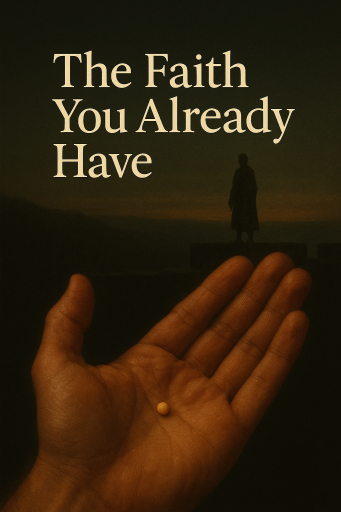
    Jesus told his disciples the same thing when they begged for “more faith.” He pointed them to mustard seeds—those annoying little weeds that just kept faithfully doing their thing, growing and multiplying. The issue isn’t the size of your faith. It’s whether your faith is alive and doing what faith does: getting planted, taking root, pushing through soil.

    Reconsider faith. It’s not spiritual capital you accumulate to spend on impressive miracles. It’s the unglamorous work of showing up again tomorrow. It’s Thoko Mpumlwana organizing in townships for decades. It’s the Trussell Trust starting with a few food parcels and refusing to stop. It’s you at the school governors’ meeting, the community litter-pick, the difficult church conversation—doing what’s right because it’s right.

    We’ll explore three practical ways to embody this kind of faith: choosing your rampart, practicing unglamorous faithfulness, and creating visibility for the vision. And yes, we’ll address the elephant in the room—what this means for churches facing difficult decisions about their future.

    Your fear of loss isn’t weak faith. It’s proof you’ve loved well. But fear can’t be your rampart. Something must fall into the ground and die before it can grow. That’s not melodrama—that’s resurrection logic.

    Come ready to station yourself. Come ready to plant what you already have.


    For Sunday 59C, Proper22, Ordinary 27, RCL Year C
    Habakkuk 1:1-4; 2:1-4 and Luke 17:5-10

  • When Grace Gets Messy: The Hero Jesus Actually Celebrates

    When Grace Gets Messy: The Hero Jesus Actually Celebrates

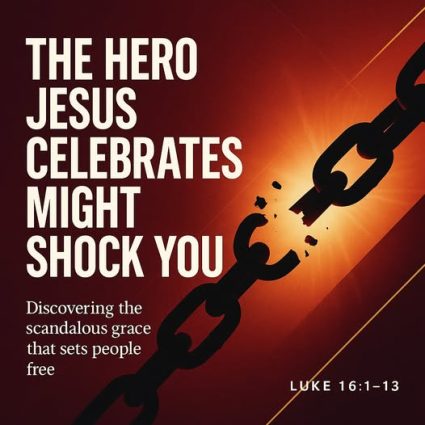
    What if I told you that one of Jesus’ favourite characters was a dishonest manager who cheated his boss, acted purely out of self-interest, and broke every rule in the book? And that this same character teaches us the most profound lesson about what it means to follow Christ in our complex, broken world?

    This Sunday, we’re diving into one of Jesus’ most uncomfortable parables—the story of the dishonest manager found only in Luke’s Gospel. It’s a tale that has made theologians squirm for centuries, and for good reason. Here’s a man who forgives massive debts without authorization, acts from entirely selfish motives, and gets commended by Jesus for it. It challenges everything we think we know about biblical heroes and moral purity.

    But here’s the scandalous truth: sometimes grace works through the most unlikely people for all the wrong reasons. The tenant farmers trapped in crushing debt cycles—the kind that could never be repaid no matter how hard they worked—suddenly found themselves free. Free to breathe, free to choose, free to hope again. Sound familiar? Walk down any British high street and you’ll see the same debt traps today: payday lenders, impossible student loans, and cycles designed to keep people permanently dependent.

    John Wesley understood this scandal of grace. He preached to coal miners and factory workers, insisting that God’s love wasn’t reserved for the morally upright or financially secure. Wesley’s doctrine of social holiness demands that we see personal faith and social justice as inseparable—we cannot love God without working to liberate our neighbours from whatever binds them.

    This parable asks uncomfortable questions: What would it look like for the church to be agents of actual debt forgiveness? How do we practice Sabbath economics in a culture built on perpetual debt? When do our pure motives matter less than the liberation we can offer?

    The dishonest manager teaches us that there are no perfect heroes in God’s kingdom—only forgiven people called to extend that forgiveness to others. In our fractured world, this isn’t just good news. It’s scandalous news. It’s Methodist news. It’s gospel.

    Because sometimes the most Christ-like thing we can do is act for entirely un-Christ-like reasons, trusting that God’s grace is bigger than our motives and powerful enough to break every chain that binds.


    For Sunday 57C, Proper20, Ordinary 25, RCL Year C
    Luke 16 v1-13

  • When Faith Stops Making Sense, and that is exactly the point

    When Faith Stops Making Sense, and that is exactly the point

    What do you do when God asks you to invest in a future you can’t see?

    This Sunday the lectionary puts two provocative stories in front of us. Jeremiah buying property while the enemy armies breach the city walls, and Jesus’ parable of the neighbours who never met: one feasting daily in purple robes while the other is dying of hunger.

    Jeremiah’s real estate deal was financial madness. The Babylonians were literally breaking down Jerusalem’s defences. Yet he follows God’s to buy the field, carefully following every legal procedure and carefully storing the title deed. Why? Because sometimes faith requires us to act as if God’s future is more real than our present crisis. Follow the guy who is going to be crucified; buy the farm; help the poor and honour the weak.

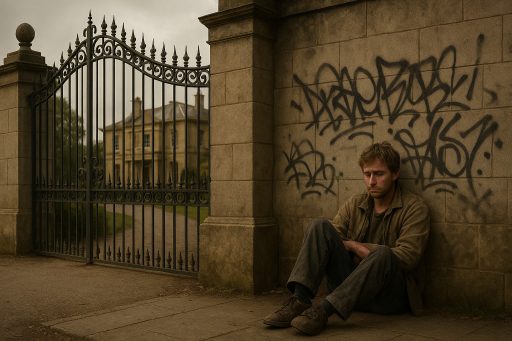
    Then there’s the rich man and Lazarus, the only character with a name in Jesus’ parables. “Lazarus” means “the one whom God helps.” Let that sink in. Outside the rich man’s ornamental gate lay the one whom God helps, covered in sores, longing for scraps that even the guard dogs got to eat. Those dogs show more compassion, than their wealthy master ever did.

    The rich man’s sin wasn’t active cruelty.  It was comfortable complicity. He didn’t personally create Lazarus’s poverty. He just, unquestioningly, benefited from it an unjust system. He had gates to keep people out, dogs to guard his comfort, and eyes that, somehow, never noticed the suffering steps away.

    The ancient story holds a truth that is only now being rediscovered as the best secular minds try to understand how to bring healing and wholeness to the world. Listen. The opposite of poverty isn’t prosperity. The opposite of poverty is community.

    These passages will challenge how we think about our resources, our relationships, and our responsibility.
    If we don’t like what they say it may be that we are more ‘rich man’ than Lazarus.

    But really it is a call to see Lazarus and buy shares in hope.  Somewhere there’s a foolish, faithful act waiting for you. Something that declares God’s future and partners in its creation.

    For Sunday 58C, Proper21, Ordinary 26, RCL Year C

  • Living in the Generous Circle of Grace

    Living in the Generous Circle of Grace

    Harvest celebrations should be more than beautiful displays of produce. When the world is crying out for justice, sustainability, and hope, they should challenge us as disciples to recognise grace, and to respond to it with loving grace. In other words, Harvest should challenge us to take our place within God’s “generous circle of grace.”

    Gracious provision is as ubiquitous as our efforts to claim independence. Yet even if we can harness solar energy, we cannot create the sun; even if can build wind turbines we cannot summon the Westerlies that power them. Every life exists within a web of divine generosity operating far beyond our control.

    Psalm 65 recognizes that God “visits” the earth, active and involved in the systems of life, not a casual observer, but as one who comes to sustain, to set things right, to provide what’s needed and to restore what’s been damaged.

    Paul’s appeal to the Corinthian church to support struggling believers in Jerusalem, was both protest against stark inequalities plaguing their world; and acting so that communities could flourish and everyone have enough. This is not prosperity ‘gospel’, but the revolutionary gospel truth which declares that God provides abundantly so that all can live abundantly.

    Jesus’ challenging words about worry in Matthew 6 don’t advocate reckless irresponsibility but address the kind of anxiety that paralyzes rather than motivates. Climate anxiety is real and valid, but Christ invites us to channel our concerns into faithful action. From Transition Towns movements building local resilience to community fridges in Lewisham where surplus food flows freely, modern communities embody this trust through practical sustainability.

    The message confronts our culture’s failure to be content with enough, recognising that security comes through relationship rather than accumulation, through community connection rather than consumption. Living in the generous circle means practicing grateful recognition, cultivating enough-ness as spiritual discipline, acting with generous courage, and building mutual support networks.

    This isn’t naive optimism ignoring genuine challenges like climate change and inequality. Rather, it’s hope grounded in God’s character revealed in Jesus Christ and the Spirit inspiring communities to live in revolutionary ways. Choosing simplicity over excess, renewable energy over exploitation, or community gardens over individual accumulation are practical ways of choosing, and living, God’s healing, justice, and peace.

    The generous circle of grace isn’t just a theological concept.  It is a way of life, a pattern of relationship, a source of hope for us and all the world.

    Psalm65 v9-13; 2Corinthians9v6-15; Matthew6v25-33
    #HarvestFestival

    (more…)

  • Why Jesus’ Revolutionary Table Manners Matter Today (Luke 14 v1, 7-14)

    Why Jesus’ Revolutionary Table Manners Matter Today (Luke 14 v1, 7-14)

    Imagine you’re at a wedding reception, scanning the room for your assigned seat. That familiar flutter of anxiety: “Where do I fit in?” We’ve all experienced that moment of social navigation, wondering about our place in the carefully orchestrated hierarchy of any gathering.

    This Sunday, we’re diving into one of Jesus’ most subversive teachings: a story that begins at a dinner party but explodes into something far more radical. What looks like ancient etiquette advice becomes a blueprint for revolutionary living that could transform how we see ourselves, our communities, and our world.

    Jesus wasn’t just observing social dynamics at this particular feast; he was dismantling them entirely. His teaching about taking the lowest place isn’t about false modesty or strategic networking. It’s about fundamentally reimagining what makes life valuable and meaningful.

    In the UK’s class-obsessed culture, where postcodes and accents still determine opportunities, Jesus’ words cut through our carefully constructed hierarchies like a knife through wedding cake. He’s calling us to something beautifully disruptive: a life where worth isn’t determined by status, where the margins become the centre, and where radical hospitality transforms strangers into family.

    The most explosive part? Jesus doesn’t stop with personal humility. He challenges us to revolutionize our guest lists, literally and metaphorically. Instead of networking events and strategic relationships, he calls us to open our tables to the overlooked, the struggling, the different, the uncomfortable.

    This isn’t just ancient wisdom; it’s desperately contemporary. From food banks discovering that volunteers and recipients aren’t so different, to online communities breaking down barriers during lockdowns, we’re seeing glimpses of what Jesus envisioned: tables where everyone belongs.

    The Methodist tradition has always understood this radical hospitality. Our spiritual ancestors created communities where coal miners worshipped alongside merchants, where women preached alongside men, where the gospel became genuinely good news for everyone, especially those society had written off.

    This Sunday, discover how Jesus’ “upside-down kingdom” isn’t just a nice ideal.  It is a practical, transformative way of living that promises real blessing, authentic community, and the kind of joy that comes from finally finding where you truly belong.
    Explore what it means to live as people of the resurrection, choosing love over status, service over self-promotion, and radical inclusion over comfortable exclusion.

    For Sunday 44C, RCL Year C (Luke 14 v1, 7-14)