What do you do when God asks you to invest in a future you can’t see?
This Sunday the lectionary puts two provocative stories in front of us. Jeremiah buying property while the enemy armies breach the city walls, and Jesus’ parable of the neighbours who never met: one feasting daily in purple robes while the other is dying of hunger.
Jeremiah’s real estate deal was financial madness. The Babylonians were literally breaking down Jerusalem’s defences. Yet he follows God’s to buy the field, carefully following every legal procedure and carefully storing the title deed. Why? Because sometimes faith requires us to act as if God’s future is more real than our present crisis. Follow the guy who is going to be crucified; buy the farm; help the poor and honour the weak.
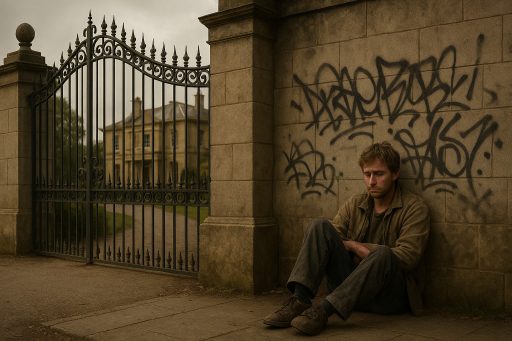
Then there’s the rich man and Lazarus, the only character with a name in Jesus’ parables. “Lazarus” means “the one whom God helps.” Let that sink in. Outside the rich man’s ornamental gate lay the one whom God helps, covered in sores, longing for scraps that even the guard dogs got to eat. Those dogs show more compassion, than their wealthy master ever did.
The rich man’s sin wasn’t active cruelty. It was comfortable complicity. He didn’t personally create Lazarus’s poverty. He just, unquestioningly, benefited from it an unjust system. He had gates to keep people out, dogs to guard his comfort, and eyes that, somehow, never noticed the suffering steps away.
The ancient story holds a truth that is only now being rediscovered as the best secular minds try to understand how to bring healing and wholeness to the world. Listen. The opposite of poverty isn’t prosperity. The opposite of poverty is community.
These passages will challenge how we think about our resources, our relationships, and our responsibility.
If we don’t like what they say it may be that we are more ‘rich man’ than Lazarus.
But really it is a call to see Lazarus and buy shares in hope. Somewhere there’s a foolish, faithful act waiting for you. Something that declares God’s future and partners in its creation.
For Sunday 58C, Proper21, Ordinary 26, RCL Year C
Leave a Reply